

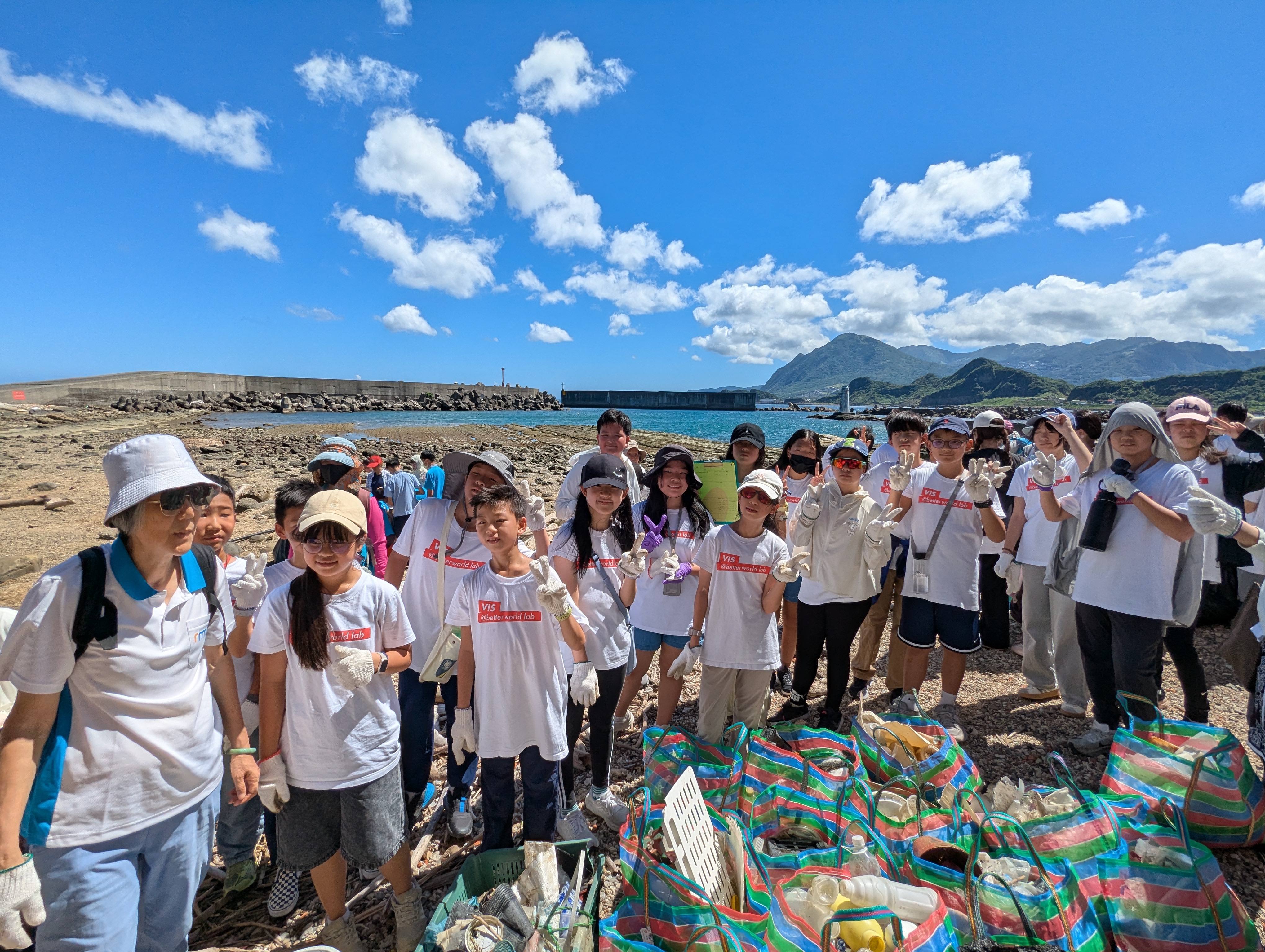
Last Friday (the 3rd), VIS Junior High students visited the National Museum of Marine Science and Technology in Badouzi, Keelung, to take part in a beach cleanup activity.
In the morning, students first attended a session at the museum to learn about the differences between the International Coastal Cleanup (ICC) and general community-organized cleanups. The ICC program requires not only participants to remove litter along the shore but also to carefully document the types of trash collected. Once compiled and analyzed, this data becomes an important resource that can be submitted to governments for policy-making and legislative reference. Many previously banned single-use plastic products were identified and addressed through this kind of research.
Afterwards, students were divided into two large groups and assigned to different beach areas. Each group was further divided into smaller teams, with each team responsible for recording and removing different categories of waste. By the end of the morning’s efforts, VIS students had collected a total of 115 kilograms of trash, with plastic bottles and bottle caps making up the majority.
Stay tuned for the next update, where we will share more about the students’ afternoon learning and hands-on experiences at the museum.
上週五(3 日),VIS 國中部學生前往基隆八斗子國立海洋科技博物館 (National Museum of Marine Science and Technology),參與戶外淨灘行動。
上午時分,學生們先在館內課程中學習 #ICC國際淨灘行動 (International Coastal Cleanup) 與一般民間自發性淨灘的差異。此次 VIS 參與的為 ICC 版本,不僅需要清理沿岸漂流垃圾,更需詳細紀錄所收集到的垃圾種類。這樣的數據在後續統計與整理後,能成為重要依據,提交給政府作為政策研擬或立案參考。許多過去被禁用的一次性塑膠製品,正是透過此類資料得以推動。
之後,學生們分成兩大組,在不同海灘區域展開行動。各組再細分為小隊,分工負責不同類型的垃圾紀錄與清理。經過一整個上午的努力,全體 VIS 共清理出 115 公斤垃圾,其中以寶特瓶與瓶蓋數量最多。
下篇將持續分享學生們在海科館下午的學習與體驗活動。