

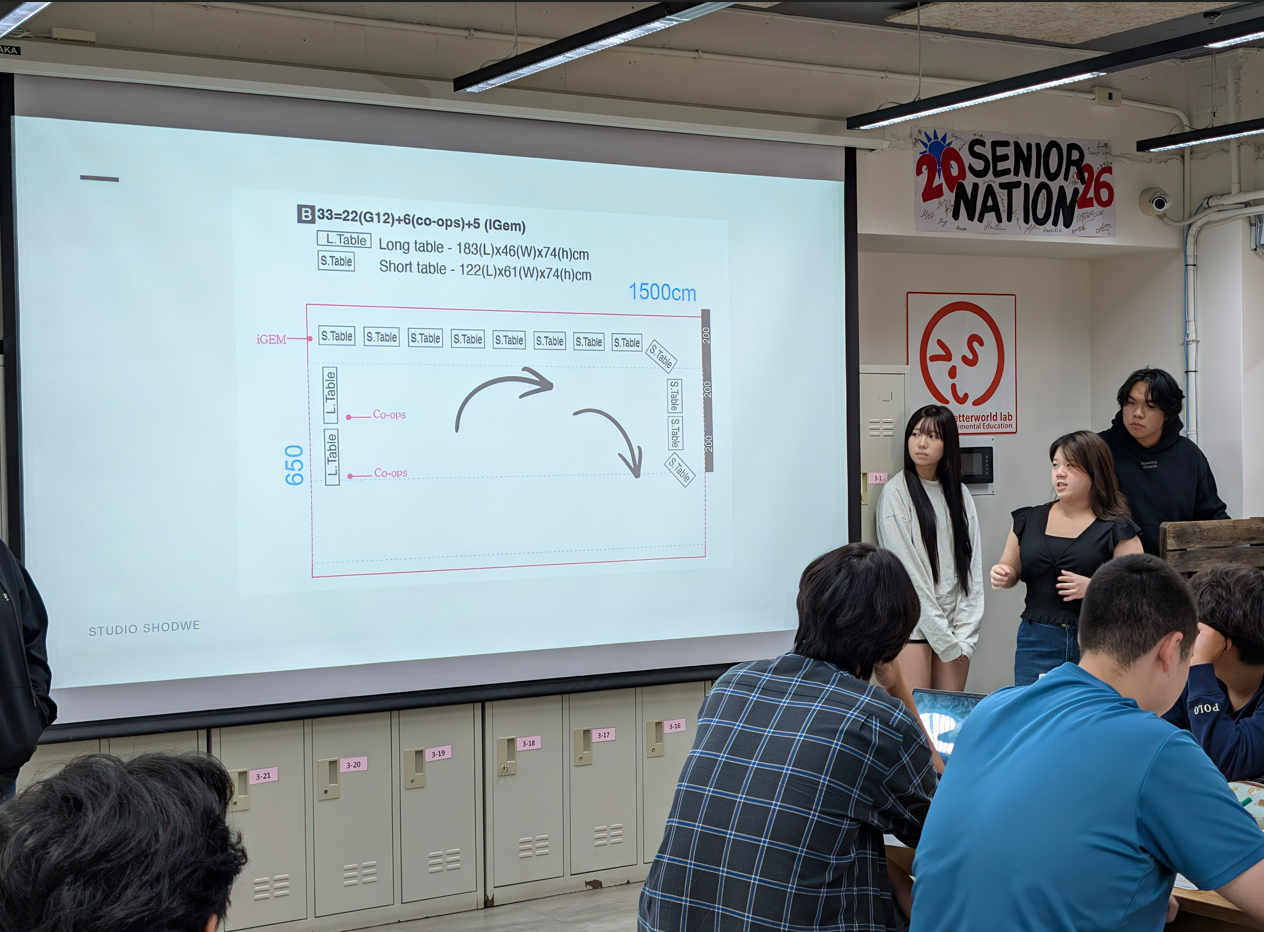
上週四,G12 PBL Capstone 學生分組分享他們提出的構想,每一組須提出成果展中全班共同互動元素。每位學生雖然各自製作自己的 Capstone 專題,但也要攜手合作,設計出能與參觀者互動、展現班級共同特色的展覽元素。
每組發表提案後,其他學生便依據三項重要指標評估各項構想:
包容性: 是否能讓每位學生的專題都融入其中,並呈現全班共同的特色與認同?
參觀者互動: 是否能引導參觀者實際參與,帶來互動,而並非只是被動觀賞?
可行性: 考量現有的時間、場地與材料,這項構想是否能切實執行?
藉著這三項指標,學生要找出能串連各個 Capstone 專題的構想,也要思考如何讓參觀者理解 Capstone 的核心精神。即使沒有學生在旁解說,展覽本身也應能傳達其中的理念與內容。
一場完整的成果展,背後少不了縝密規劃與反覆討論。這次投票讓我們看見學生如何集思廣益,思考如何打造一場凝聚全班心意、由大家共同參與的展覽體驗。
Last Thursday, students in G12 PBL Capstone presented their proposals for a class-wide interactive element, as they brought their individual ideas together through one sharing session. Although each student is developing an individual Capstone project, the class is also working collaboratively to create an interactive feature that engages with visitors and represents what they share as a group.
After each presentation, students evaluated the proposals by assigning scores from 1 to 4 across three key criteria:
Inclusivity: Does the idea give every student's project a place and reflect the shared identity of the class?
Visitor Engagement: Does it invite visitors to actively participate in a meaningful way, rather than simply observe?
Feasibility: Can the idea realistically be built with the time, space, and materials available?
Together, these criteria help students identify an idea that connects different Capstone projects, and communicates what Capstone is about for visitors, even when a student is not standing nearby to explain it.
Behind every exhibition is a great deal of planning and discussion. This ballot gave us a glimpse into the thought students put into creating an exhibition experience that belongs to the whole class.