

本學期,G7A 以 Sketching Sustainable Spaces 為主題,結合 SDG 11「永續城鄉」與 SDG 15「保育陸域生態」,透過跨領域學習,思考一個重要的驅動問題(Driving Question):如何透過深思熟慮的設計,打造更永續的未來城市?
專題初期,學生建立藝術與地理的基礎知識,學習藝術元素與設計原則,以及地理思維的方法。接著,他們運用所學,為虛構國家繪製自然資源分布的分級設色地圖(Choropleth Maps),培養資料分析、空間思考與視覺設計能力。
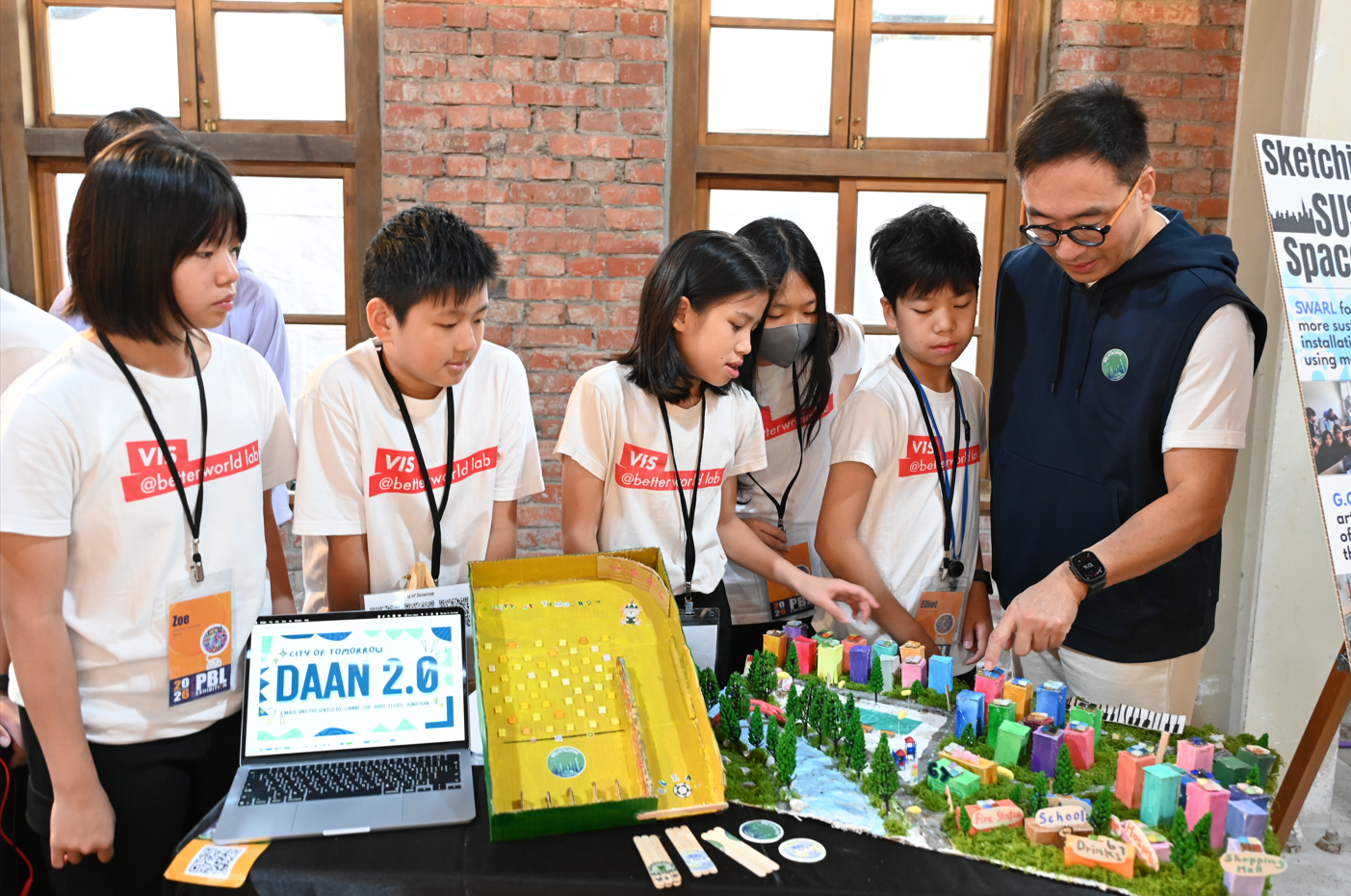
隨著專題逐步深化,學生開始投入城市規劃,利用回收材料製作建築模型,並與組員共同設計整座永續城市的藍圖。透過分析真實世界案例,各組針對都市發展挑戰提出創新方案,將綠色基礎設施、再生能源、創新建築設計及兼具功能性的裝置藝術融入城市模型之中。
為了讓專題更貼近真實社會,學生也研究世界各地的永續城市案例,並撰寫提案提交給臺北市政府,提出讓臺北邁向更宜居、更綠色、更永續城市的具體建議。
在 PBL 成果展中,各組也展現了截然不同的創意構想:
SWARL 透過互動式鋼琴裝置產生電力。
Be-leafers 設計生態基礎設施,降低都市污染。
G.O.A.T. 運用兼具功能性的公共裝置收集雨水。
City of Tomorrow 將人們日常活動所產生的能量轉化為再生能源。
Spatial Universe 運用回收材料與潔淨能源,重新構想未來圖書館的樣貌。
透過這項跨領域 PBL 專題,學生融合創意、研究能力、團隊合作與設計思維,不僅提出具體可行的永續構想,更展現青年如何以今日的創新思維,共同勾勒未來永續城市的藍圖。
This semester, Grade 7A explored the theme Sketching Sustainable Spaces, connecting their learning to SDG 11: Sustainable Cities and Communities and SDG 15: Life on Land. Their driving question challenged students to imagine how thoughtful design can create more sustainable cities for the future.
Students began by building foundational knowledge in both art and geography, learning the elements and principles of art alongside geographical thinking. They first applied these skills by creating choropleth maps to visualize the distribution of natural resources in fictional countries, strengthening both their analytical and design abilities.
They then shifted their focus to urban design, creating model buildings from recycled materials before collaborating with teammates to plan the layout of an entire sustainable city. Drawing inspiration from real-world case studies, each group developed innovative solutions to urban challenges, incorporating green spaces, renewable energy, creative architecture, and functional installation art into their city models.
To connect their ideas with the real world, students researched sustainable cities around the globe and wrote proposals for the Taipei City Government, offering practical suggestions for making Taipei a greener and more sustainable place.
At the PBL Exhibition, each team proudly presented its unique vision:
SWARL generated electricity through interactive piano installations.
Be-leafers designed living infrastructure to help reduce pollution.
G.O.A.T. collected rainwater through a functional public installation.
City of Tomorrow transformed everyday movement into renewable energy.
Spatial Universe reimagined libraries using recycled materials and clean energy.
Through this interdisciplinary PBL project, students combined creativity, research, collaboration, and design thinking to demonstrate how today's ideas can help shape the sustainable cities of tomorrow.