

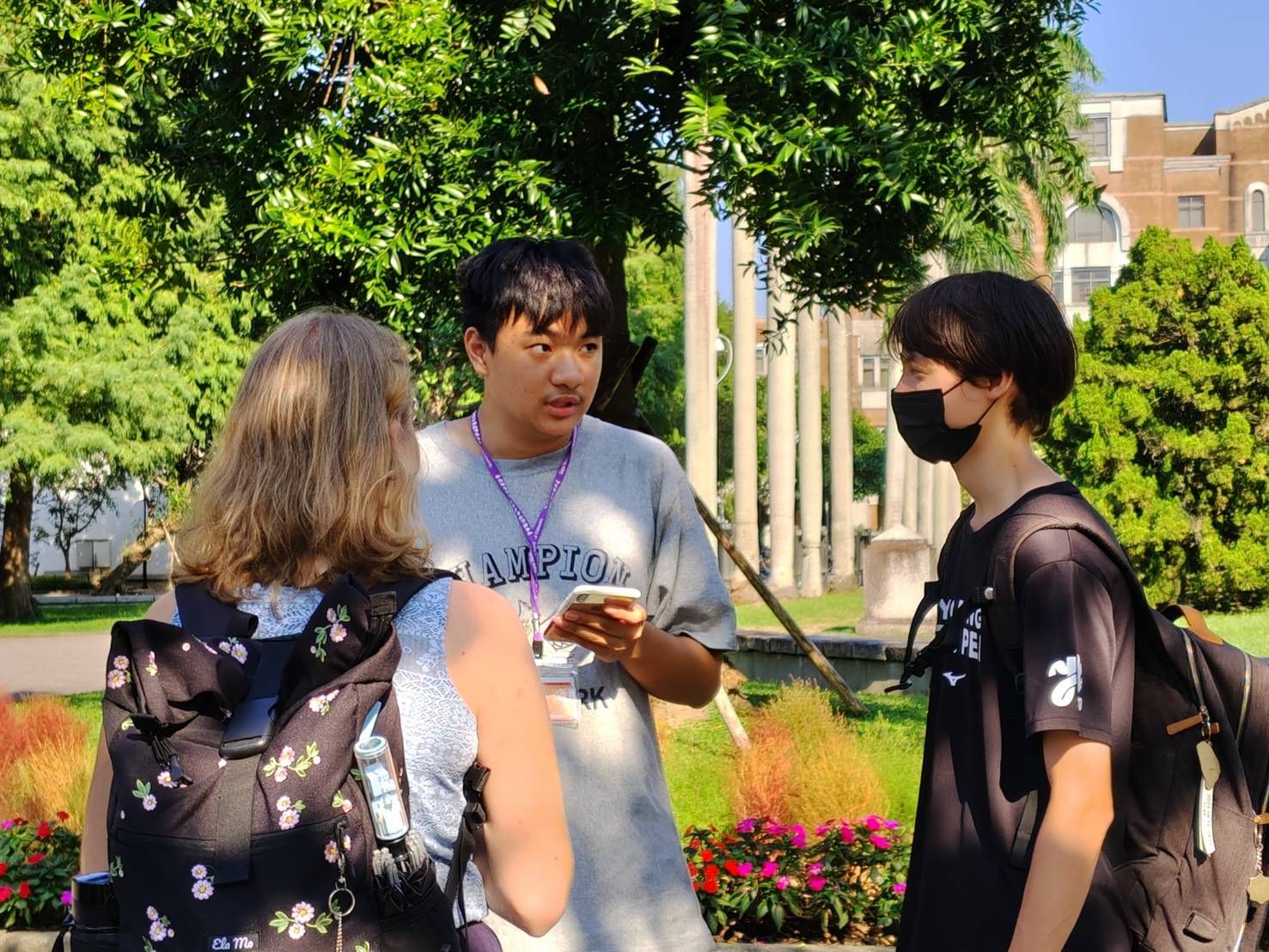
On Monday, students in the Discover Taipei course headed to National Taiwan University campus to conduct street interviews to explore ethnic integration and conflicts involving Indigenous peoples in Taiwanese society.
During the Japanese colonial period, National Taiwan University was home to some of the most advanced anthropological research in Taiwan. The university has a rich collection of materials and exhibits related to Taiwan’s Indigenous peoples. NTU has also been the site of several conflicts concerning Indigenous rights and interests, making it an important place for understanding contemporary Indigenous issues in Taiwan.
Before the field trip, students learned about the history of oppression and cultural loss experienced by Taiwan’s Indigenous peoples. They will also learn about the extra points system for Indigenous students in Taiwan’s academic admission system, which was introduced in response to this historical background and is still in use today.
After the field trip, students analyzed how NTU students, who are among the most academically successful students in Taiwan’s university admission system, view the additional points system for Indigenous students. Through these interviews, students will explore ethnic integration and ethnic tensions in contemporary Taiwanese society.
本週一,Discover Taipei 課程的學生走進國立臺灣大學校園,透過街頭訪談,探討臺灣社會中原住民族所面臨的族群融合與衝突議題。
臺大與臺灣原住民族研究有著深厚的歷史淵源。日本殖民統治時期,這裡便是臺灣重要的人類學研究重鎮之一,校內也收藏了大量與原住民族相關的資料與展品。此外,臺大曾發生多起涉及原住民族權益的衝突事件,使這座校園成為理解當代臺灣原住民族議題的重要切入點。
在出發訪談之前,學生先了解臺灣原住民族在歷史上所遭受的壓迫,以及隨之而來的文化流失。他們也將認識臺灣現行升學制度中的原住民學生加分機制,了解這項制度如何回應原住民族所經歷的歷史處境,以及它為何延續至今。
完成實地訪談後,學生將分析臺大學生如何看待原住民學生升學加分制度。由於臺大學生是透過臺灣大學升學制度錄取、學業表現相對優異的學生群體之一,他們的觀點也提供了一個值得探究的切入角度。
透過這次訪談與分析,學生將進一步思考:在當代臺灣社會中,族群之間如何走向融合?不同群體對公平與歷史補償又可能抱持哪些看法?而這些觀點之間的差異,又如何反映出社會中的族群張力?