

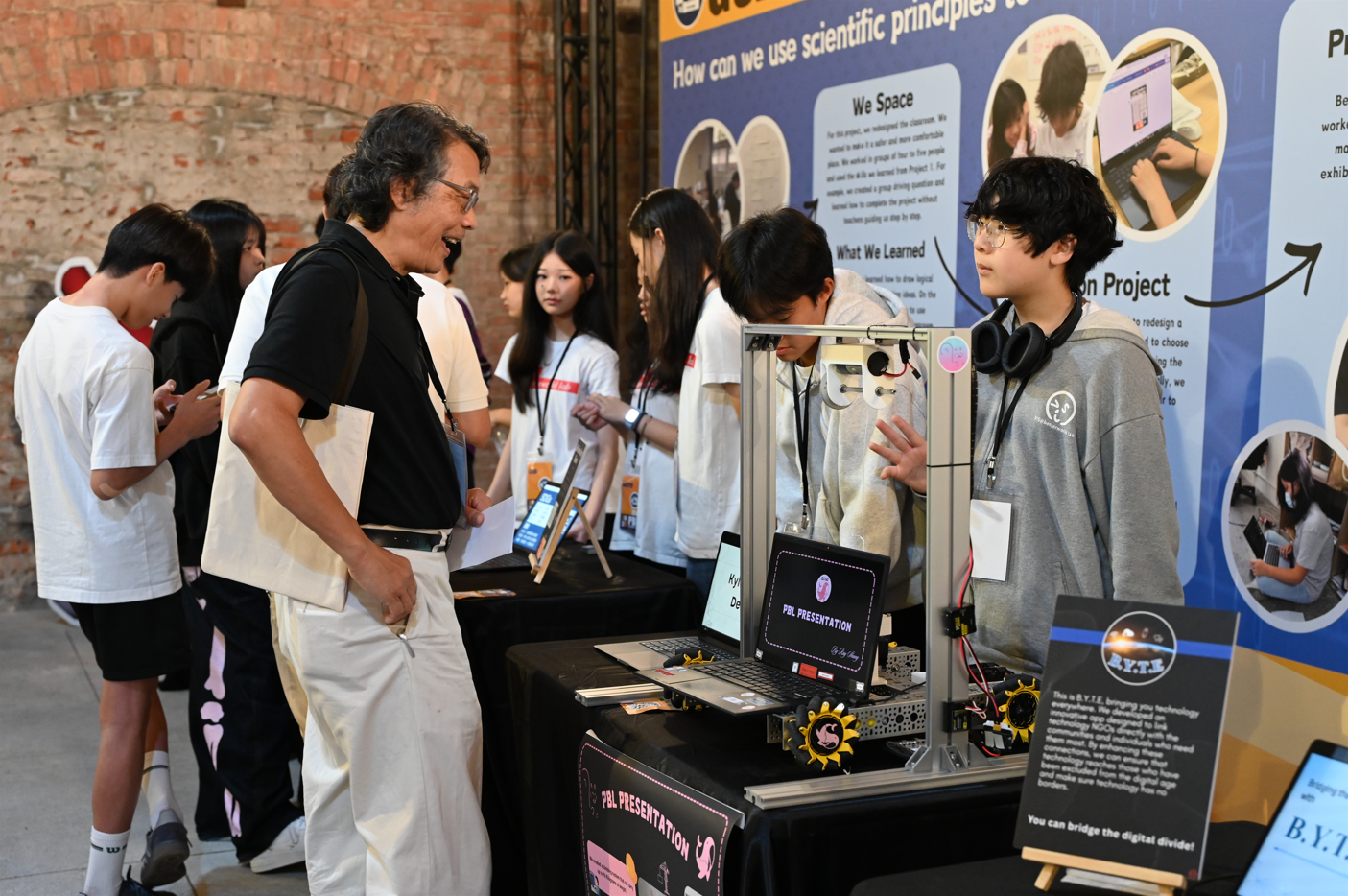
PBL 成果展回顧持續進行,本次由 G8B 登場!
本學期,G8B 以 Chip In! 為主題,圍繞核心問題:「數位素養如何引導我們以安全、負責任的方式採取行動,減少社區中的不平等?」學生結合數位素養、設計思考與社會實踐,回應聯合國 SDGs 9 與 10 所關注的全球議題。
課程一開始,學生先探討「生活品質」的真正意涵,並透過圖像分析與討論打破刻板印象。接著逐步培養數位素養能力,包括攝影倫理、地理資訊繪製、移除 metadata 保護個人隱私,以及理解數位資訊如何被蒐集、分析與負責任地運用。
奠定基礎後,學生進一步展開調查,運用科技探索社區需求,並分組規劃屬於自己的社會影響力方案。從發想 App、設計品牌識別、提案簡報,到接受同儕回饋持續修正,再到拍攝倡議影片、完成程式開發與設計互動體驗,每個環節都展現出團隊合作與創新思維,也讓成果展參觀者能親身體驗他們的創意。
各組運用科技回應不同的社會需求:
Partis Aquamundus 開發媒合平台,串聯使用者與致力改善潔淨水資源的 NGO。
EDU RISE 建立平台,支持推動教育機會平等的公益組織。
Medard Support 連結志工、捐款者與協助天然災害受災社區的 NGO。
B.Y.T.E. 致力縮短數位落差,協助科技公益組織與資源不足的社區建立連結。
Better Health Connection(B.H.C.)設計 App,協助使用者支持為弱勢族群提供醫療服務的 NGO。
透過這項跨領域 PBL 專題,學生深刻體會到,數位素養不只是學會使用科技,更是懂得善用科技解決真實世界的問題,為社會帶來正向改變。結合研究、程式設計、溝通表達與團隊合作,G8B 將創新構想化為具體行動,展現科技如何凝聚社區力量,為更美好的未來注入改變的可能。
Our PBL Exhibition recap continues with Grade 8B!
This semester, Grade 8B explored the theme Chip In!, investigating the driving question: How can digital literacy guide safe and responsible action to reduce inequality in our community? Their project integrated digital literacy, design thinking, and social impact while addressing issues connected to the United Nations Sustainable Development Goals (SDGs).
Students began by examining what quality of life means and challenging stereotypes through visual analysis and discussion. As the semester progressed, they developed essential digital literacy skills, including ethical photography, geographic mapping, protecting personal privacy by removing metadata, and analyzing how digital information can be collected and shared responsibly.
Building on these foundations, students conducted a campus audit, explored how technology can be used to identify community needs, and worked collaboratively to develop their own social impact initiatives. In teams, they created original app concepts, designed logos, pitched their ideas, and refined their projects through peer feedback. They also filmed call-to-action videos, coded their apps, and designed interactive activities that allowed visitors to experience their ideas firsthand during the exhibition.
Each team focused on a different area where technology could connect communities with organizations making a difference:
Partis Aquamundus developed an app linking users with NGOs working to improve access to clean water.
EDU RISE created a platform supporting organizations that promote equitable access to education.
Medard Support connected volunteers and donors with NGOs assisting communities affected by natural disasters.
B.Y.T.E. focused on reducing the digital divide by connecting technology-focused NGOs with underserved communities.
Better Health Connection (B.H.C.) designed an app that helps users support NGOs providing healthcare to disadvantaged populations.
This interdisciplinary PBL project allows students to discover that digital literacy is about using technology responsibly to solve problems and create positive social change. By combining research, coding, communication, and collaboration, Grade 8B demonstrated how innovation can empower communities and inspire meaningful action.