

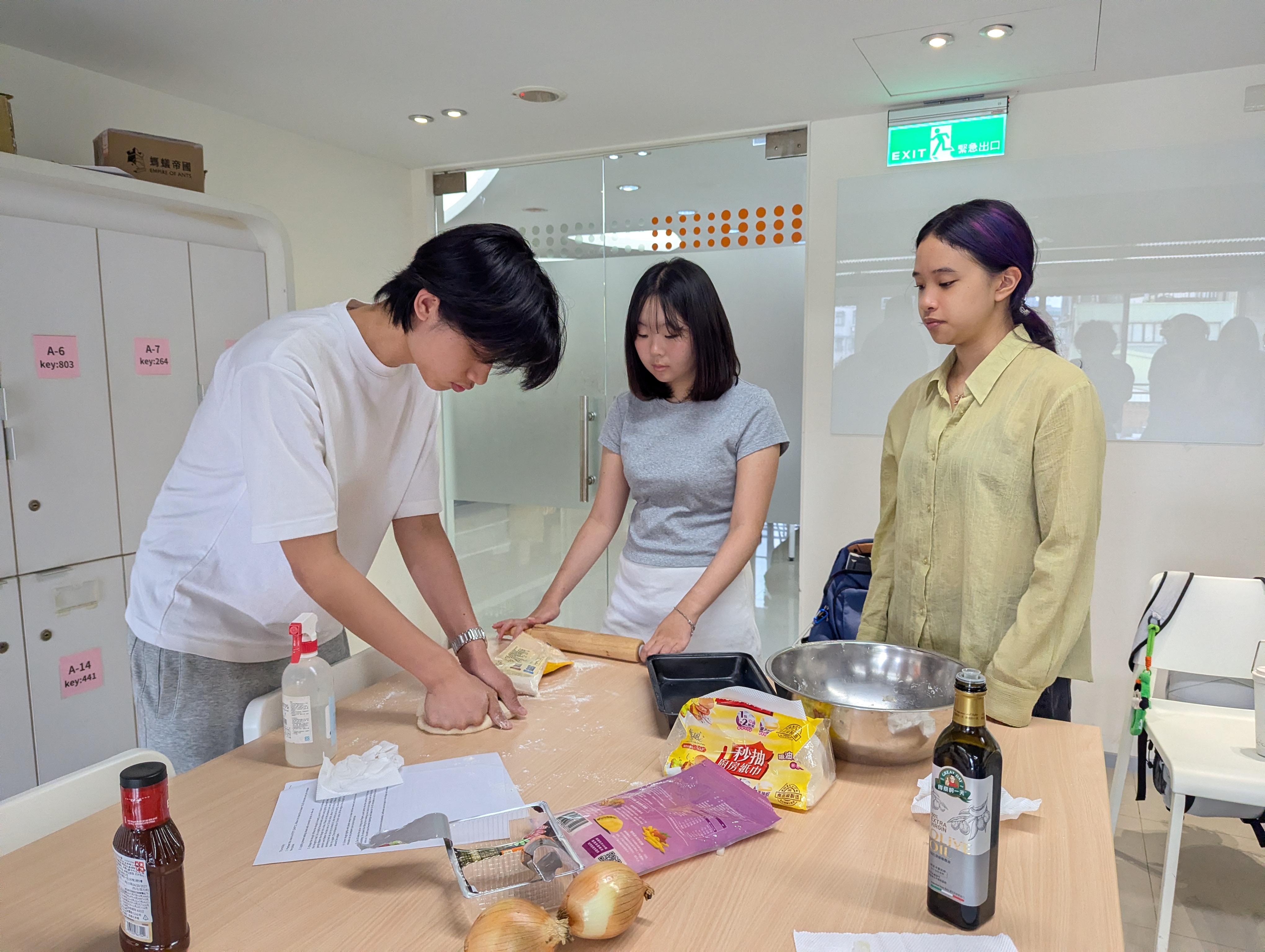
在 Mr. Collin 的生物課中,學生從零開始親手製作披薩,在實作中探索細胞呼吸,又名釋放作用(cellular respiration)的科學奧秘!
開始動手做之前,學生先認識酵母如何進行無氧呼吸(anaerobic respiration),也就是發酵(fermentation)。課堂中,他們探討酵母如何將葡萄糖(glucose)分解為二氧化碳、乙醇與能量(ATP),以及這項生物作用為何能讓麵包與披薩麵糰膨脹、形成蓬鬆柔軟的口感。
帶著這些科學知識,學生親手將麵粉、酵母、水、糖、鹽與橄欖油混合成麵糰,並透過揉麵使麩質(gluten)逐漸形成。接著,他們耐心等待麵糰發酵,觀察發酵產生的二氧化碳如何被包覆在麵糰中,形成細密的氣孔,讓披薩餅皮更加輕盈鬆軟。
下一堂課,學生將發酵完成的麵糰塑形成披薩,鋪上自己喜愛的配料並送入烤箱烘烤,同時將製作過程中的每一個步驟,與課堂所學的生物概念相互印證。
藉著實驗與烹飪實作,學生更深入理解發酵(fermentation)、呼吸作用(respiration)及微生物在日常生活中的重要角色,也親身體會到科學並非抽象的知識,而是存在於生活的每一個細節。當學生能親眼觀察、親手驗證、親口品嘗科學時,學習便真正活了起來。
In Mr. Collin's Biology class, students learned the science of cellular respiration by making their own pizzas from scratch!
Students first learned how yeast carries out anaerobic respiration, also known as fermentation. They also learned how yeast converts glucose into carbon dioxide, ethanol, and energy (ATP), and why this process is essential for making bread and pizza dough rise.
With their scientific knowledge, students mixed flour, yeast, water, sugar, salt, and olive oil to create their own dough. After kneading the dough to develop gluten, they left it to rise, observing how carbon dioxide produced during fermentation became trapped inside the dough, creating the air pockets that make pizza crust light and fluffy.
In the following lesson, students shaped their dough, added their favorite toppings, and baked their pizzas while connecting every step of the process back to the biological concepts they had learned in class.
By combining scientific theory with a culinary experience, students gained a deeper understanding of fermentation, respiration, and the role microorganisms play in our everyday lives. Learning becomes even more meaningful when students can see, test, and taste the science in action!