

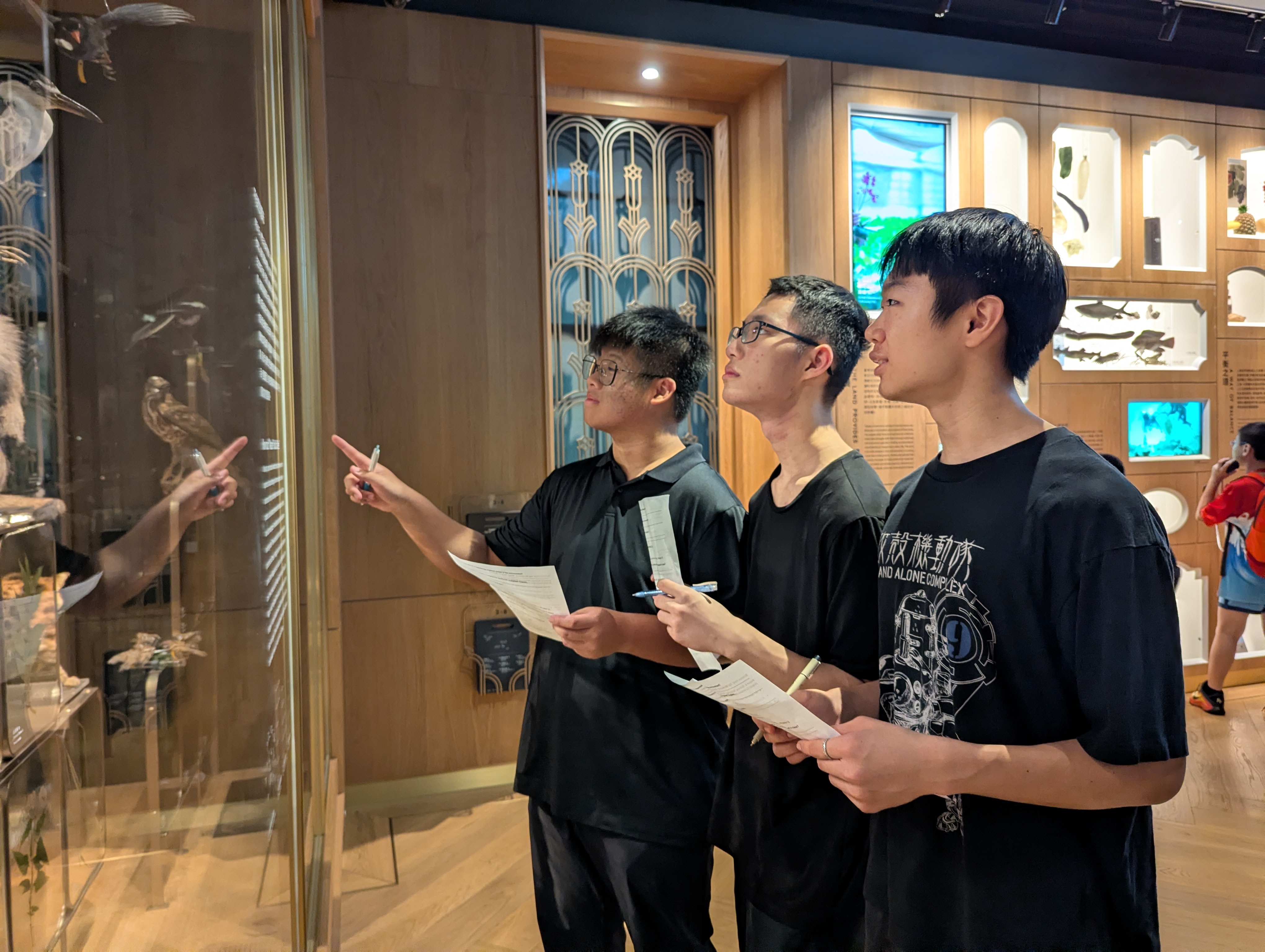
學期最後一周,Science Department 學生前往國立臺灣博物館,探索化學如何與日常生活緊密相連。結合一整學期的課程內容,學生回顧化學在現實生活中的多元應用,認識多位傑出科學家(包括加拿大化學家)對科學發展的重要貢獻,也進一步了解科學所開展的各種職涯可能。此次參訪同時為學生後續的成果發表奠定基礎,培養他們運用正確的科學證據與專業術語,透過簡報、展示與實作示範,清晰傳達科學知識與研究成果的能力。
另一方面,Intro to Visual Arts、Makerspace 與 Media Production 課程學生則前往 #臺北市立美術館。延續課堂中建立的藝術評論( art criticism )方法,學生挑選館內作品進行深入分析,並思考作品如何與自己本學期的創作相互呼應。學生可藉此提升視覺素養(visual literacy),也在美術館典藏作品與自身創作歷程之間建立起更深刻且富有意義的連結。
無論是探索科學,或沉浸於藝術之美,學生都能跳脫教室,在第一手的學習環境中驗證所學、拓展視野,並深刻體會知識與生活、城市及世界之間密不可分的連結。
To conclude the semester, students from the Science Department visited the National Taiwan Museum (國立臺灣博物館), where they explored how chemistry connects to the world around us. Drawing on the concepts they studied throughout the semester, students reflected on real-world applications of chemistry, the contributions of influential scientists—including Canadian chemists—and the many career pathways that science can open. The visit also prepared students to communicate their scientific understanding through engaging presentations, displays, and demonstrations using accurate scientific evidence and terminology.
Meanwhile, students from Intro to Visual Arts, Makerspace, and Media Production visited the Taipei Fine Arts Museum (臺北市立美術館). Building on the art criticism framework they had practiced in class, students selected artworks to analyze and reflected on how the pieces connected with their own creative projects completed during the semester. The experience encouraged them to deepen their visual literacy while making meaningful connections between museum collections and their own artistic journeys.
Learning doesn't stop at the classroom door. Whether exploring science or art, students are encouraged to engage with authentic environments, apply their knowledge in meaningful ways, and discover how their learning connects to the world around them.